Project background
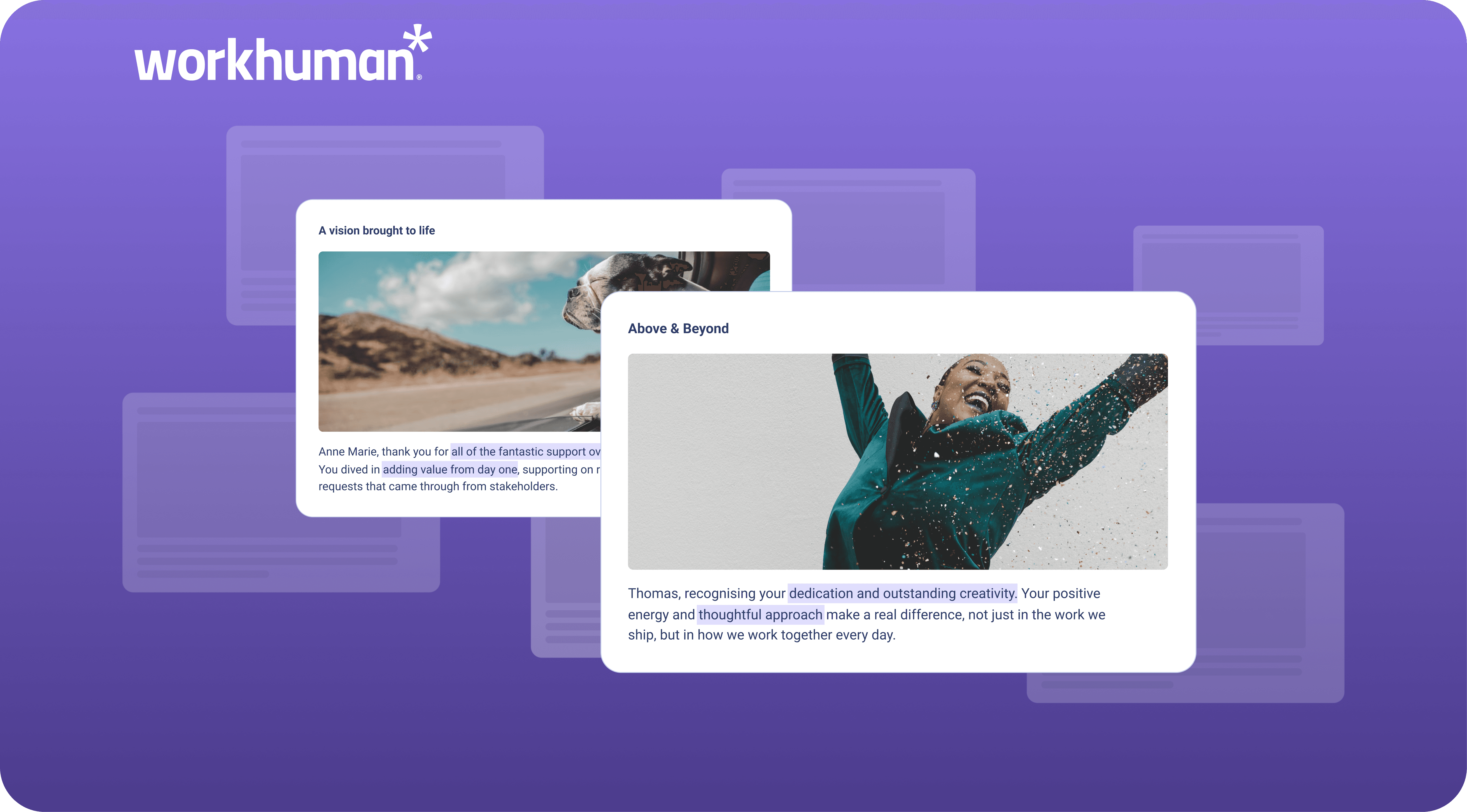
The Manager’s Highlight feature was originally deprecated by Workhuman due to a series of usability issues, unclear value, and misalignment with evolving product standards.
Its removal, however, surfaced substantial feedback from users, particularly managers, who still needed a simple, meaningful way to acknowledge and amplify recognition their direct reports received. The feature gave managers the ability to highlight something in an employee’s award and draw extra attention to it, and also allowed them to write a short personal message.
In response to this feedback, I was tasked with reimagining and modernising the feature. The goal was to deliver a clearer, more intuitive experience that aligned with Workhuman’s updated design system and fully complied with WCAG 2.2 accessibility guidelines.
Research goals
To kick off the design process, I aimed to gain a deep understanding of the underlying user challenges and clarify the true value the Manager’s Highlight feature should deliver.
Research methodology
Once the research goals were defined, I executed a structured research approach. I began by interviewing key stakeholders, including product managers, researchers and engineers, to gather internal perspectives, prior learnings and technical considerations.
I then conducted user interviews with both internal and external users, including managers and employees. These sessions helped me understand why managers wanted to use the feature, how employees perceived it, and preferences around keeping content private versus sharing it publicly on the recognition feed. The insights gathered from this research laid the foundation for defining key user pain points, needs and opportunities.
Research Outcomes
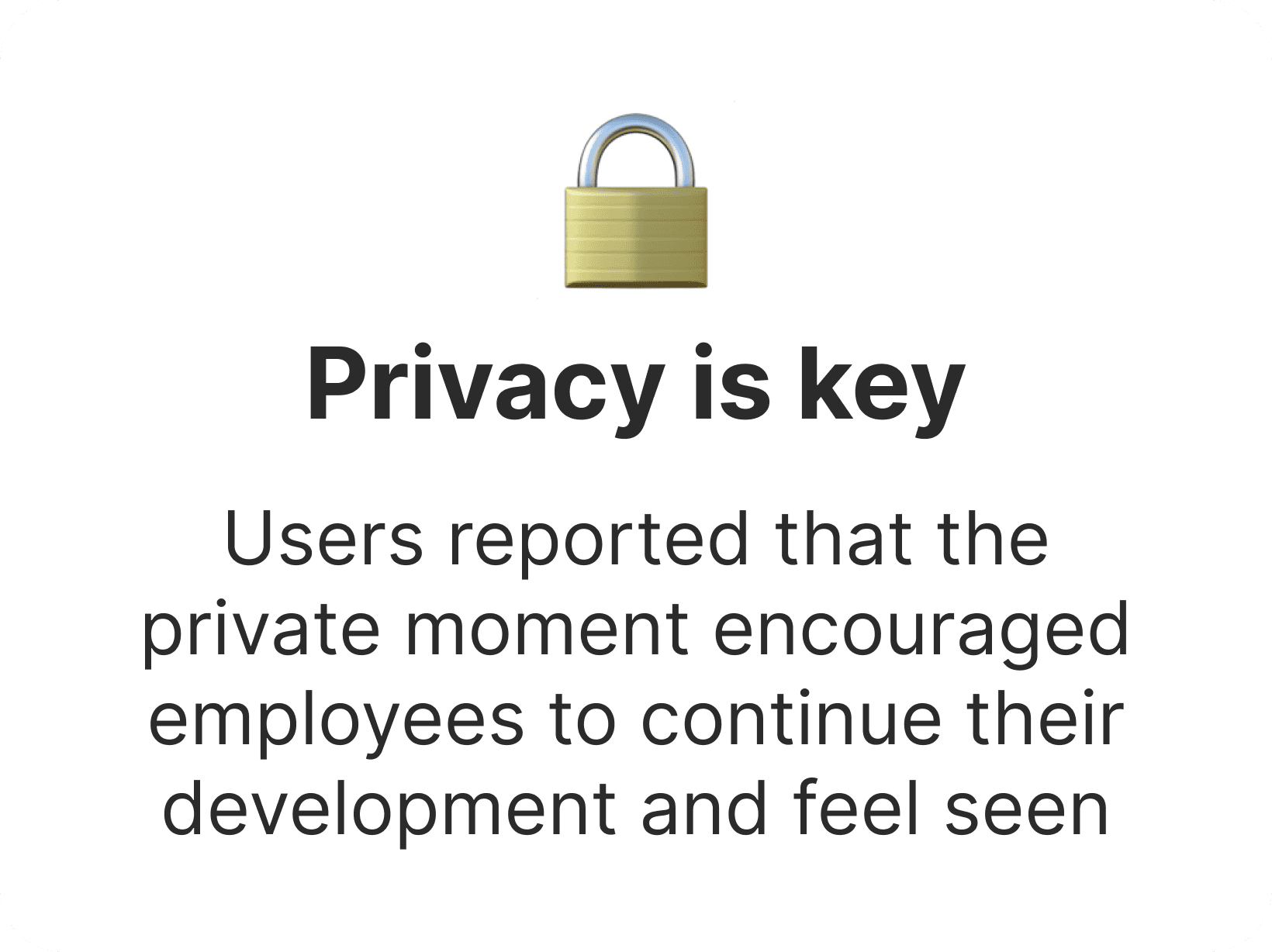
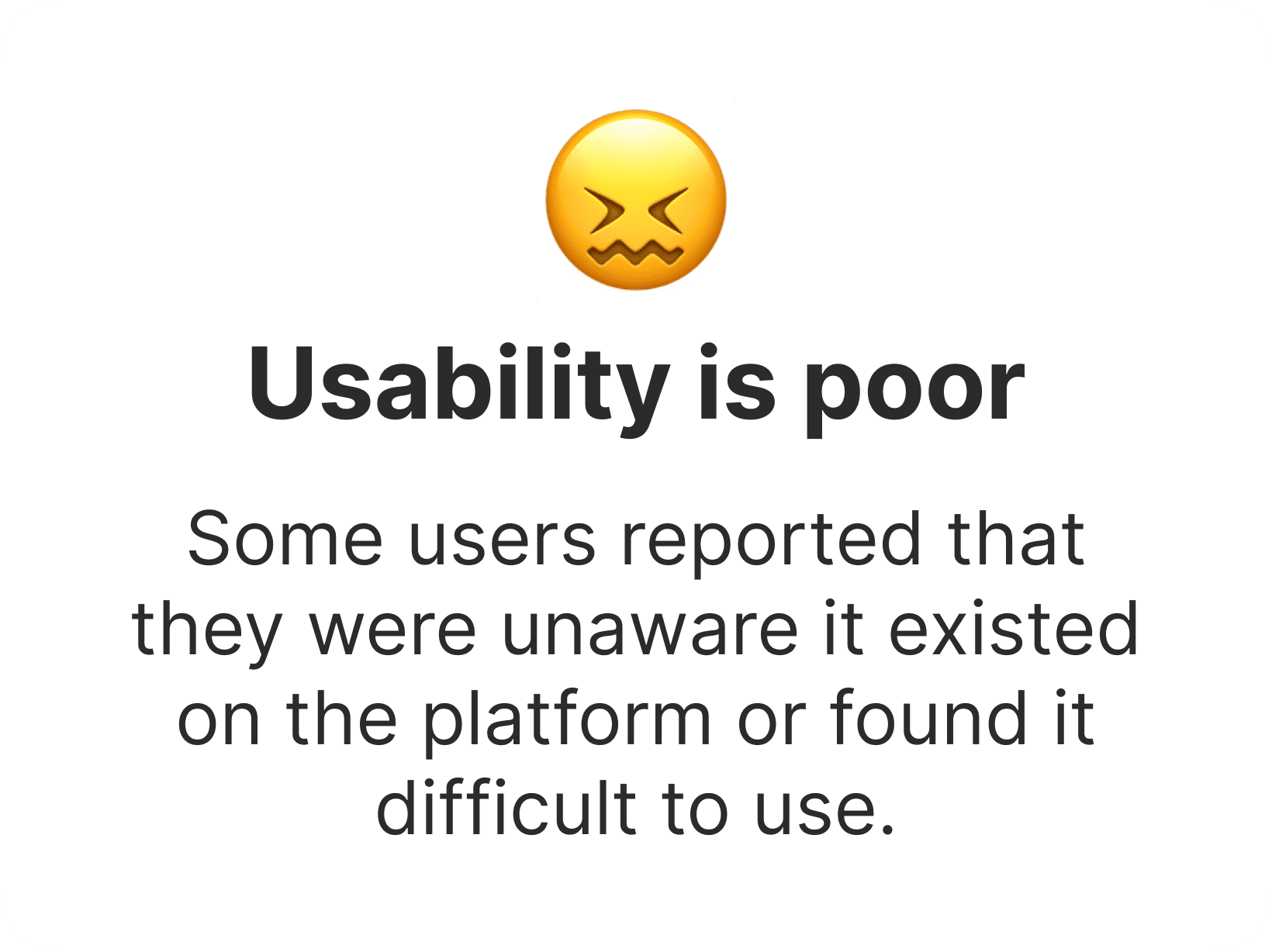
Research showed that managers value privately recognizing employees’ good work, creating a personal and meaningful form of encouragement. Recipients felt seen, with managers acknowledging their progress and achievements. While useful, the feature was often cumbersome and overlooked.
These insights allow us to take the process to the next step in design, improving usability and the impact of recognition.
Previous Experience
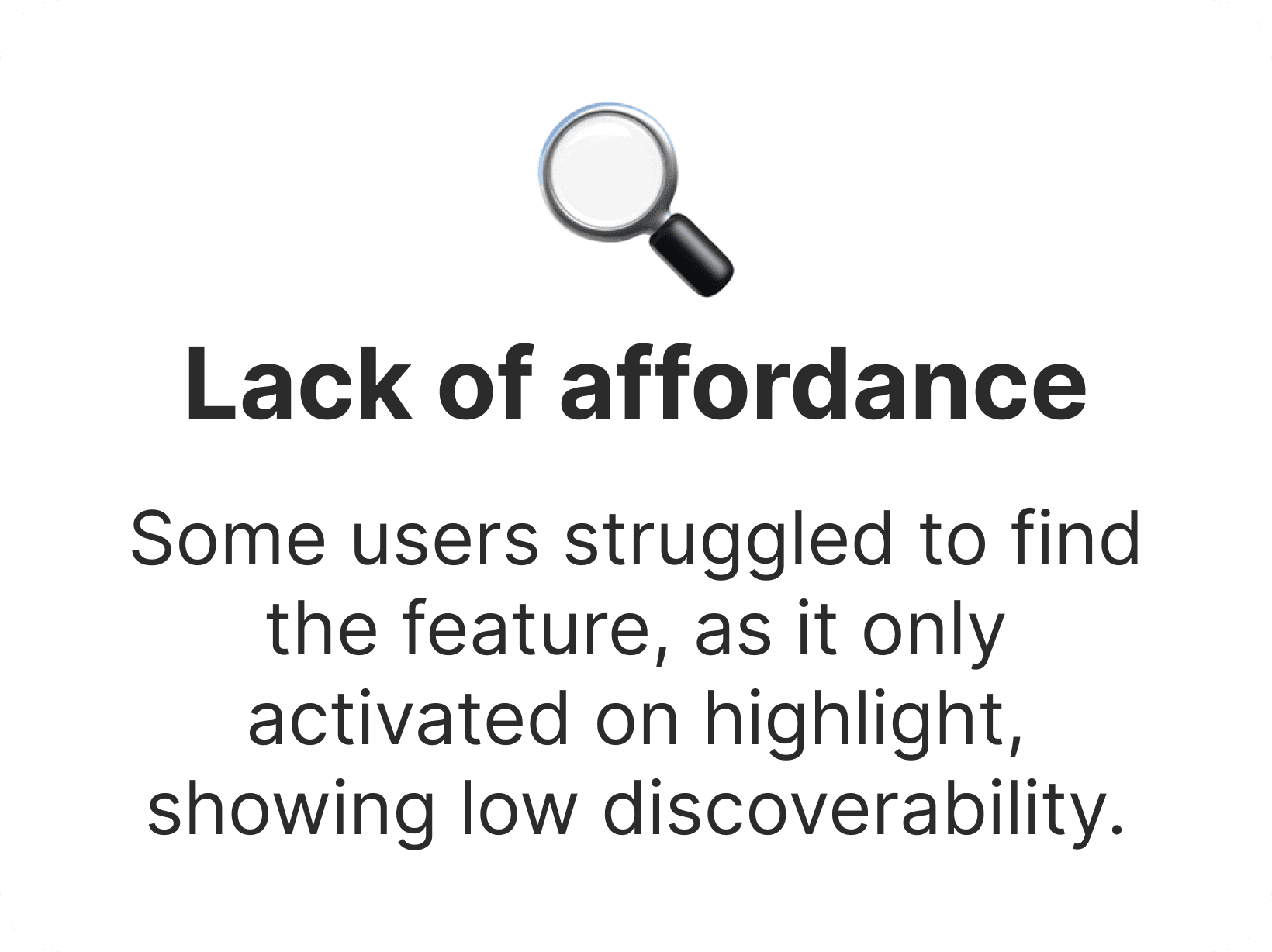
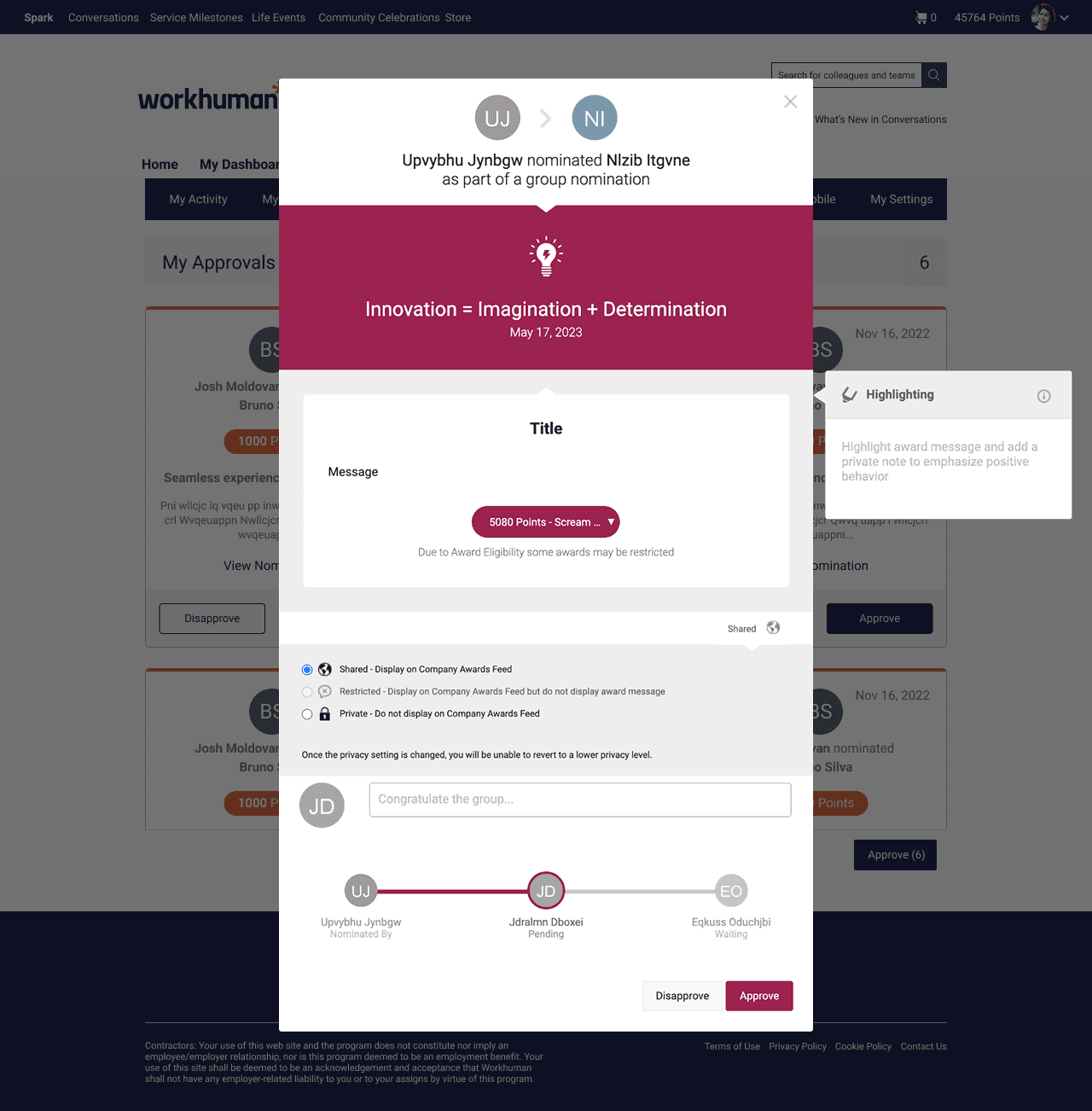
Previously, the highlight feature was only triggered by user's highlighting text with their mouse, this usually happened accidentally.
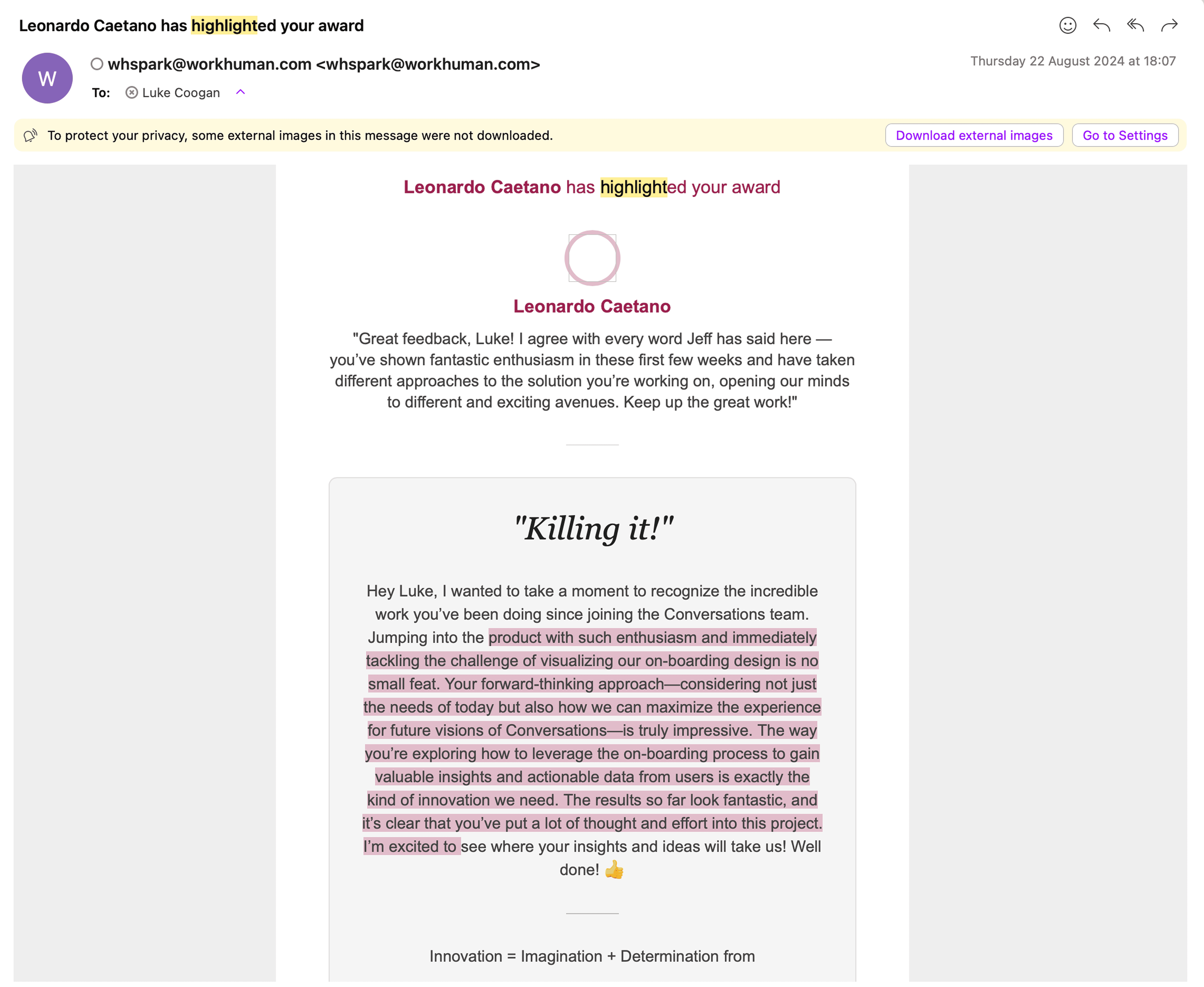
Previously, users were only notified about receiving a highlighted award through email.
Final Outcomes
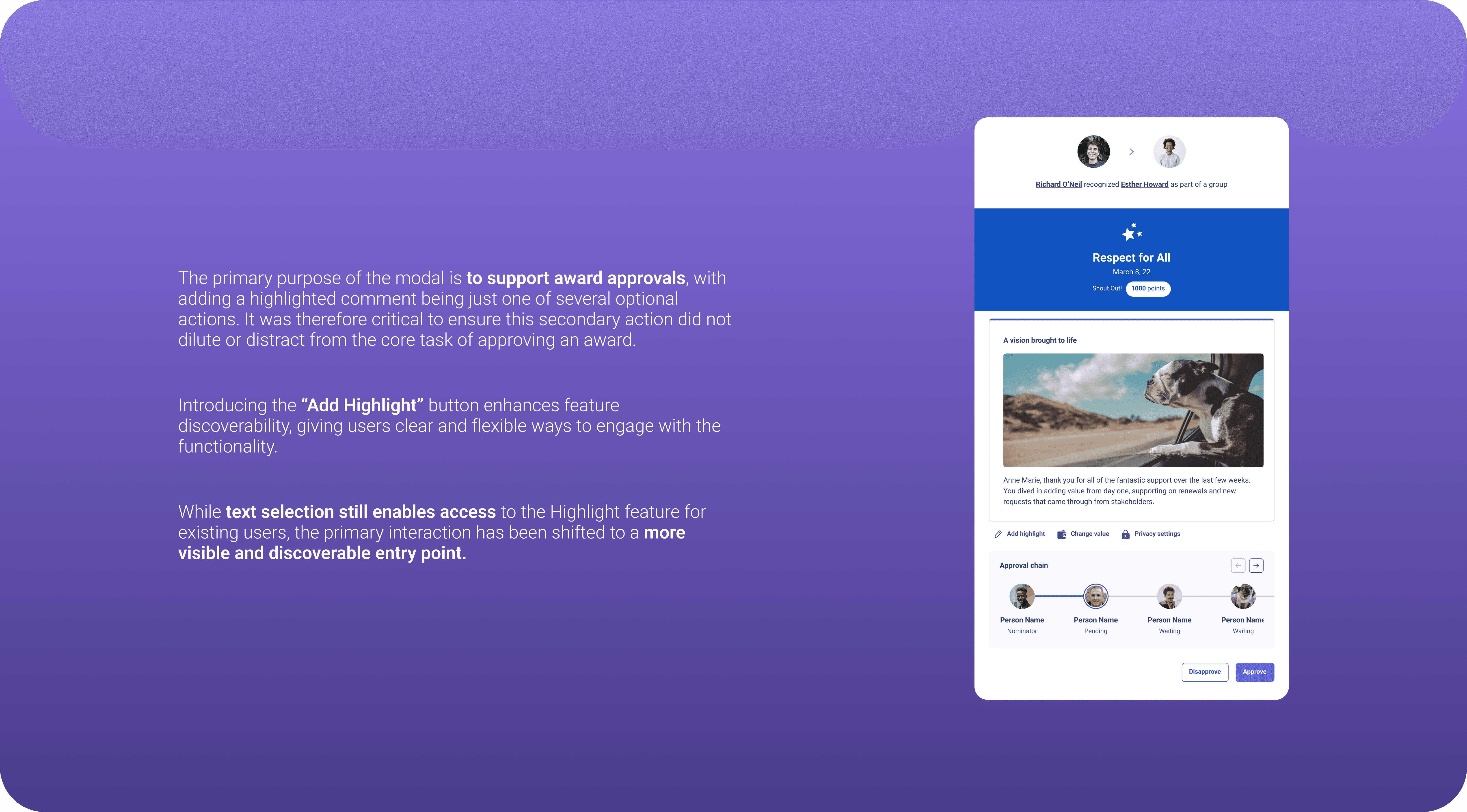
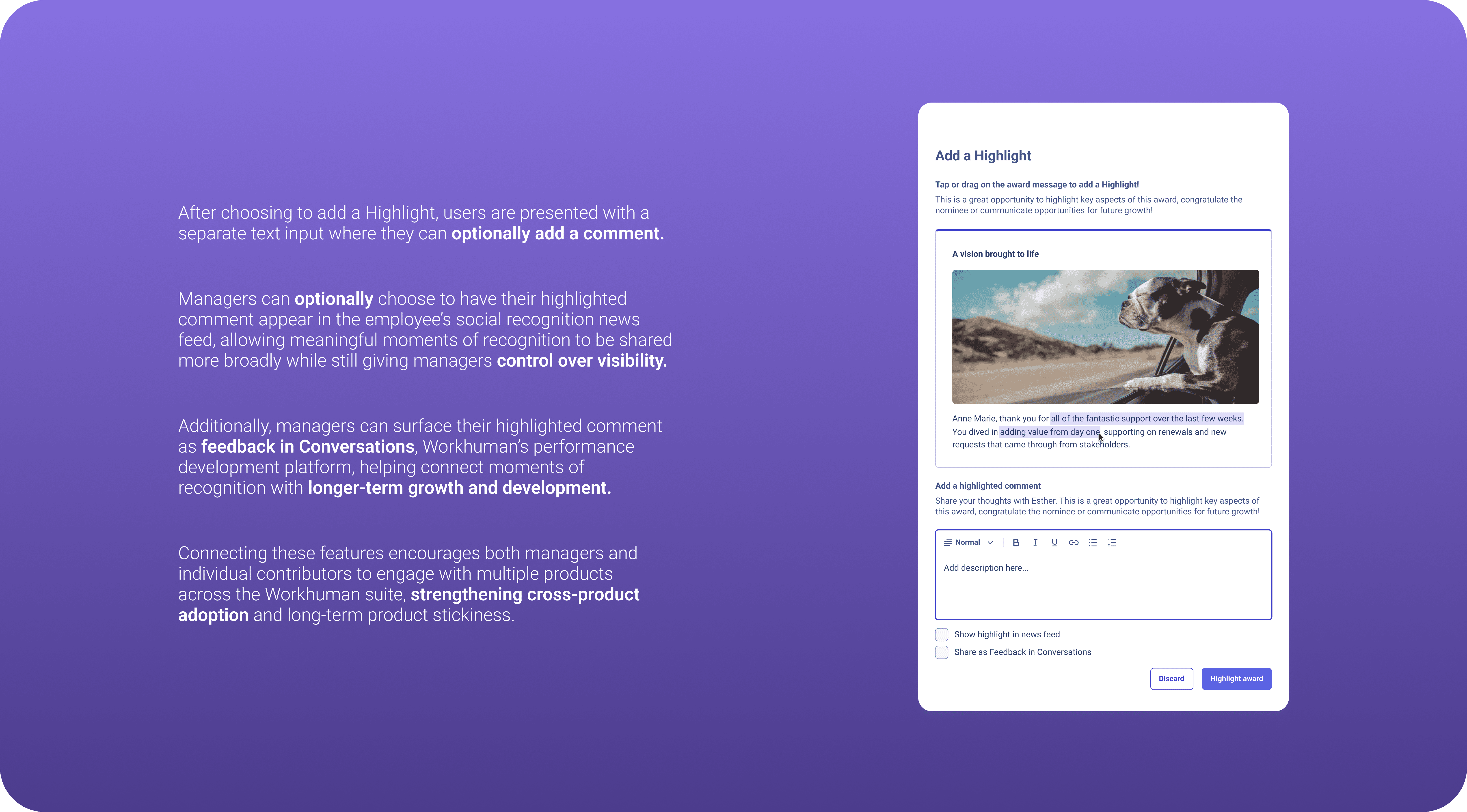
The redesigned Manager’s Highlight addresses key issues identified in user research, improving discoverability and engagement. A redesigned lightbox aligned with Workhuman’s current design system makes it easy for managers to add comments. The design retains the ability to highlight parts of awards without leaving a comment while adding an optional section for detailed feedback, giving managers flexibility. Comments are private by default and include a distinct tag to differentiate them from social feed comments, with the option to share them in Workhuman’s Conversations tool for deeper integration across the product suite.
These updates transform the highlight from a passive email notification into a prominent, user-focused experience that stands out on the platform, encouraging managers to take action and support the growth of their direct reports.
The Impact
Overall, the redesigned Manager’s Highlight had a measurable and meaningful impact on both engagement and user satisfaction. To validate the design improvements, we ran A/B testing comparing the new modal to the previous version. The results showed a 23% increase in the number of users creating highlights, demonstrating that the new interaction was more discoverable and intuitive.
We also implemented HEART-based surveys to gather qualitative feedback on user satisfaction. Users of the redesigned modal reported a 14% increase in satisfaction, citing that the flow felt clearer, more rewarding, and better aligned with their recognition workflows.
Feedback highlighted that the optional comment field and distinct visual treatment made recognition feel more personal and visible.
Beyond metrics, the redesign reinforced the feature’s role in driving meaningful engagement between managers and employees, creating more opportunities for recognition to be seen, celebrated, and integrated into ongoing performance conversations.
Overall, the redesign successfully balanced usability, discoverability, and emotional impact, delivering measurable value for both managers and employees.